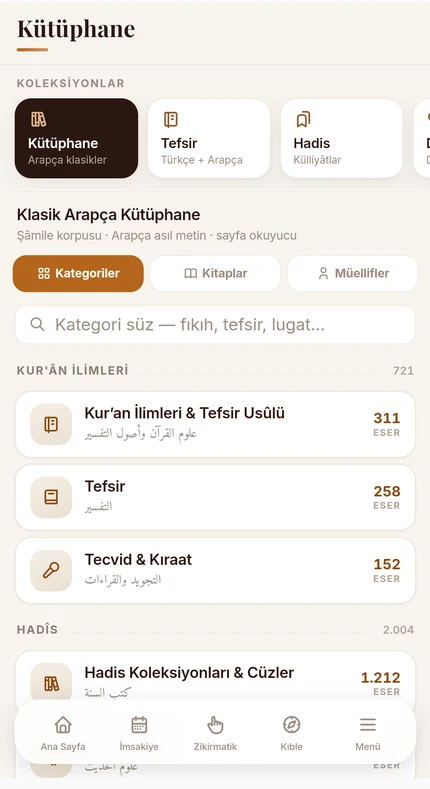
İslam Arşivi artık mobilde
Binlerce kaynağa her an, her yerden ulaşın.
Web sitemizde bulunmayan özellikleri uygulamada keşfedin.
iOS ve Android uygulamalarımız şimdi yayında!
Güvenli • Hızlı • Ücretsiz
لَا إِلٰهَ إِلَّا اللّٰهُ الْحَلِيمُ الْكَرِيمُ ﴿﴾ سُبْحَانَ اللّٰهِ رَبِّ الْعَرْشِ الْعَظِيمِ ﴿﴾ اَلْحَمْدُ لِلّٰهِ رَبِّ الْعَالَمِينَ ﴿﴾ أَسْأَلُكَ مُوجِبَاتِ رَحْمَتِكَ وَعَزَائِمَ مَغْفِرَتِكَ وَالْغَنِيمَةَ مِنْ كُلِّ بِرٍّ وَالسَّلَامَةَ مِنْ كُلِّ إِثْمٍ ﴿﴾ لَا تَدَعْ لِي ذَنْبًا إِلَّا غَفَرْتَهُ وَلَا هَمًّا إِلَّا فَرَّجْتَهُ وَلَا حَاجَةً هِيَ لَكَ رِضًا إِلَّا قَضَيْتَهَا يَا أَرْحَمَ الرَّاحِمِينَ
Lā ilāha illā Allāhu al-ḥalīmu al-karīm. Subḥāna Allāhi Rabbi al-ʿarshi al-ʿaẓīm. Al-ḥamdu lillāhi Rabbi al-ʿālamīn. Asʾaluka mūjibāti raḥmatika wa-ʿazāʾima maghfiratika wa-l-ghanīmata min kulli birrin wa-s-salāmata min kulli ithm. Lā tadaʿ lī dhanban illā ghafartahu wa-lā hamman illā farrajtahu wa-lā ḥājatan hiya laka riḍan illā qaḍaytahā yā Arḥama ar-rāḥimīn.
There is no god but Allah, the Forbearing, the Most Generous. Allah, the Lord of the Mighty Throne, is far above every imperfection. All praise belongs to Allah, the Lord of the worlds. O Allah! I ask You for all that brings about Your mercy, for Your certain pardon, for the attainment of every good, and for safety from every sin. O Most Merciful of the merciful! Do not leave me alone with a single sin You have not forgiven, a single worry You have not turned into relief, or a single need with which You are pleased that You have not met.
Source: Jami' at-Tirmidhi 479 (a sahih (authentic) hadith).
Narrated by Abdullah ibn Abi Awfa (may Allah be pleased with him). Our Prophet (peace and blessings be upon him) said: "Whoever has a request of Allah or of people, let him perform a good wudu, pray two rak'ahs, then praise Allah, send blessings upon His Messenger, and recite this dua." (Jami' at-Tirmidhi, Salat 343/479; Sunan Ibn Majah, Iqamah 189)
Our Prophet (peace and blessings be upon him) gave the following advice to a person who has a need or a request: "Whoever has a request of Allah or of people, let him perform a good wudu in accordance with its conditions, then pray two rak'ahs, then praise Allah, send blessings and peace upon the Messenger of Allah, and after that recite this dua" (Jami' at-Tirmidhi, Salat 343). This hadith sets out clearly how the salah of need is to be performed and how the dua is to be made.
The salah of need (salat al-hajah) is a two-rak'ah voluntary salah (prayer) that a person performs when he has a need concerning this world or the hereafter. It is recommended to recite Surah al-Kafirun after al-Fatihah in the first rak'ah, and Surah al-Ikhlas in the second. The dua made after the salah is an intimate supplication in which the servant asks Allah for all his needs, for the forgiveness of his sins, for the removal of his difficulties, and for the fulfilment of his lawful wishes.
The most striking aspect of this dua is the phrase "leave no need with which You are pleased unmet." Here the servant asks only that those requests which accord with Allah's pleasure be granted. This is the finest expression of courtesy and submission in dua.
O Allah, there is no god but You. You are the Forbearing, the Most Generous. You are the Lord of the Mighty Throne. You alone are the Lord of the worlds. I lay all my needs before You. Forgive my sins, turn my difficulties into relief, and grant my lawful wishes. Do not make me dependent on others. Accept every request of mine that accords with Your pleasure, O Most Merciful of the merciful. Amin.