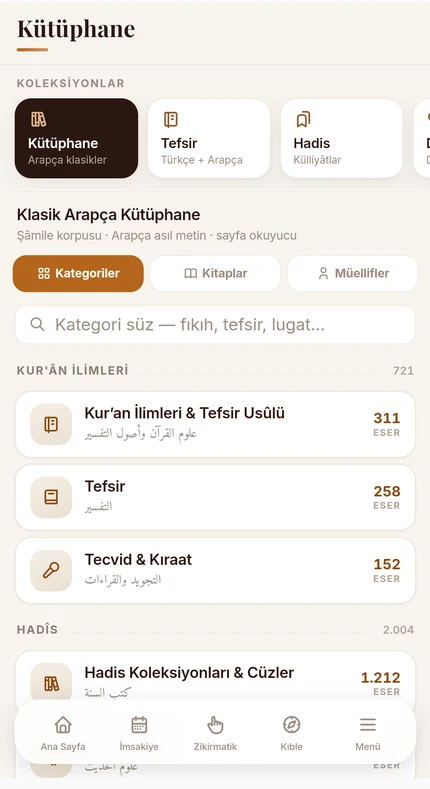
İslam Arşivi artık mobilde
Binlerce kaynağa her an, her yerden ulaşın.
Web sitemizde bulunmayan özellikleri uygulamada keşfedin.
iOS ve Android uygulamalarımız şimdi yayında!
Güvenli • Hızlı • Ücretsiz
اَللّٰهُمَّ إِنِّي أَسْتَخِيرُكَ بِعِلْمِكَ وَأَسْتَقْدِرُكَ بِقُدْرَتِكَ وَأَسْأَلُكَ مِنْ فَضْلِكَ الْعَظِيمِ فَإِنَّكَ تَقْدِرُ وَلَا أَقْدِرُ وَتَعْلَمُ وَلَا أَعْلَمُ وَأَنْتَ عَلَّامُ الْغُيُوبِ
اَللّٰهُمَّ إِنْ كُنْتَ تَعْلَمُ أَنَّ هٰذَا الْأَمْرَ خَيْرٌ لِي فِي دِينِي وَمَعِيشَتِي وَعَاقِبَةِ أَمْرِي فَيَسِّرْهُ لِي ثُمَّ بَارِكْ لِي فِيهِ وَإِنْ كُنْتَ تَعْلَمُ أَنَّ هٰذَا الْأَمْرَ شَرٌّ لِي فِي دِينِي وَمَعِيشَتِي وَعَاقِبَةِ أَمْرِي فَاصْرِفْهُ عَنِّي وَاصْرِفْنِي عَنْهُ وَاقْدِرْ لِيَ الْخَيْرَ حَيْثُ كَانَ ثُمَّ أَرْضِنِي بِهِ
Allāhumma innī astakhīruka bi-ʿilmika wa-astaqdiruka bi-qudratika wa-asʾaluka min faḍlika al-ʿaẓīm. Fa-innaka taqdiru wa-lā aqdiru wa-taʿlamu wa-lā aʿlamu wa-anta ʿallāmu al-ghuyūb.
Allāhumma in kunta taʿlamu anna hādhā al-amra khayrun lī fī dīnī wa-maʿīshatī wa-ʿāqibati amrī fa-yassirhu lī thumma bārik lī fīh. Wa-in kunta taʿlamu anna hādhā al-amra sharrun lī fī dīnī wa-maʿīshatī wa-ʿāqibati amrī fa-ṣrifhu ʿannī wa-ṣrifnī ʿanhu wa-qdir liya al-khayra ḥaythu kāna thumma arḍinī bih.
O Allah! Trusting in Your knowledge, I ask You for what is best for me; taking refuge in Your power, I ask You for strength; and I ask You to bestow upon me of Your boundless bounty. For You are able to do all things and I am able to do nothing. You know and I do not know. You are the Knower of all that is hidden.
O Allah! If in Your eternal knowledge this matter is good for me in respect of my religion, my life and my future, then make it easy for me and then grant blessing in it. And if this matter is bad for me in respect of my religion, my life and my future, then turn it away from me and turn me away from it, and decree for me only what is good, wherever it may be, and then make me content with it.
Source: Sahih al-Bukhari 1166 (a sahih (authentic) hadith).
Jabir ibn Abdullah (may Allah be pleased with him) narrated: "The Messenger of Allah (peace and blessings be upon him) used to teach us the istikharah as he would teach us a surah of the Qur'an." (Sahih al-Bukhari, Tahajjud 25, Da'awat 48; Jami' at-Tirmidhi, Salat 349; Sunan Abi Dawud, Salat 367)
Jabir (may Allah be pleased with him) relates: "The Messenger of Allah (peace and blessings be upon him) used to teach us the istikharah for all our affairs as he would teach us a surah of the Qur'an" (Sahih al-Bukhari, Tahajjud 25). This statement shows how much importance our Prophet gave to the istikharah. That he taught it as one teaches a surah of the Qur'an points to the seriousness of the matter.
In the dictionary, istikharah means "to ask for what is good." A person performs istikharah when he is about to make an important decision and cannot judge which course would be better in respect of this world and the hereafter. Before going to bed he prays two rak'ahs of voluntary salah, recites this dua, and asks Allah to guide him. It is recommended to recite Surah al-Kafirun in the first rak'ah and Surah al-Ikhlas in the second. The istikharah is the finest indication of a servant's trust in Allah and of his submission to Him.
The most important sentence of this dua is "You know and I do not know. You are the Knower of all that is hidden." The servant admits the limits of his own knowledge and leaves his whole choice to Allah. The peace or unease that comes to the heart as a result of the istikharah is accepted as a divine sign. The istikharah may be performed more than once; however, it is recommended that it not be done more than seven times.
O Allah, taking refuge in Your knowledge, I ask You for what is best. Relying on Your power, I ask You for strength. You know and I do not know; You are able and I am powerless. Direct me to what is right in my decisions. If there is good in this matter, make it easy and grant blessing in it. If there is harm in it, turn me away from it. Grant me only what is good, wherever it may be, and make my heart content with it, O my Lord. Amin.