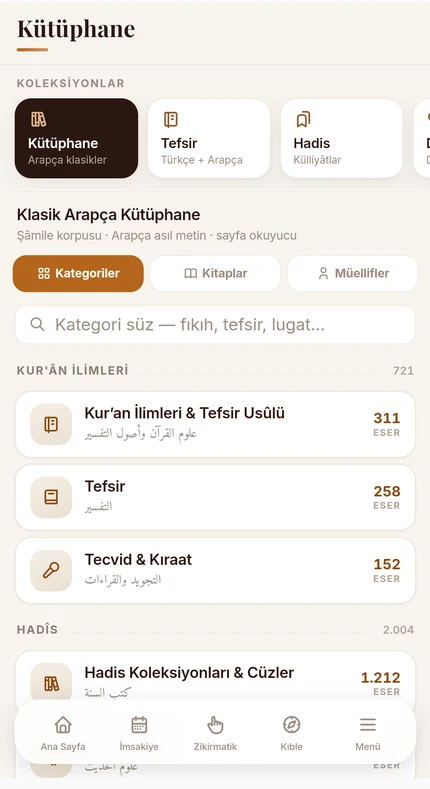
İslam Arşivi artık mobilde
Binlerce kaynağa her an, her yerden ulaşın.
Web sitemizde bulunmayan özellikleri uygulamada keşfedin.
iOS ve Android uygulamalarımız şimdi yayında!
Güvenli • Hızlı • Ücretsiz
اَللّٰهُمَّ إِنِّي ظَلَمْتُ نَفْسِي ظُلْمًا كَثِيرًا وَلَا يَغْفِرُ الذُّنُوبَ إِلَّا أَنْتَ فَاغْفِرْ لِي مَغْفِرَةً مِنْ عِنْدِكَ وَارْحَمْنِي إِنَّكَ أَنْتَ الْغَفُورُ الرَّحِيمُ
Allāhumma innī ẓalamtu nafsī ẓulman kathīran wa lā yaghfiru dh-dhunūba illā ant. Fa-ghfir lī maghfiratan min ʿindika wa-rḥamnī innaka anta l-Ghafūru r-Raḥīm.
O Allah! I have wronged myself greatly. There is none who forgives sins but You. So forgive me with a forgiveness from Yourself and have mercy on me. Truly You are al-Ghafur (the One who forgives much), ar-Rahim (the One who shows much mercy).
Source: Sahih al-Bukhari 834, 6369 (sahih (authentic) hadith).
Narrated by Shaddad ibn Aws (may Allah be pleased with him). The Prophet (peace and blessings be upon him) used to recite this dua in the salah (prayer). (Sahih al-Bukhari, Adhan 149/834, Daawat 3/6369; Sahih Muslim, Dhikr 48/2704)
The Prophet (peace and blessings be upon him) used to recite this dua in the salah (prayer) between the bowing and the prostration: "O Allah! I have wronged myself greatly. There is none who forgives sins but You. Forgive me with a forgiveness from Yourself and have mercy on me" (Sahih al-Bukhari, Adhan 149/834; Sahih Muslim, Dhikr 48/2704).
This dua resembles the dua of repentance of Musa (peace be upon him): "Rabbi innī ẓalamtu nafsī fa-ghfir lī" (al-Qasas 16). In the Prophet's dua, however, there is the addition "ẓulman kathīran" (I have wronged myself greatly). This is the finest expression of the consciousness of servanthood and of the confession of sin.
"Wa lā yaghfiru dh-dhunūba illā ant" (There is none who forgives sins but You) is a statement of tawhid. The only one who forgives is Allah. Neither the prophets, nor the angels, nor the friends of Allah can forgive sins. One must acknowledge this truth and turn directly to Allah.
The words "maghfiratan min ʿindika" (with a forgiveness from Yourself) are a request for the special forgiveness that is with Allah. A person cannot earn forgiveness by his own deeds; he is forgiven only by Allah's grace and generosity.
Reciting this dua in the bowing, in the prostration, at the end of the prayers, and at every moment of seeking forgiveness is a highly meritorious act of worship.
O Allah! I have wronged myself greatly; with my sins I have done myself much harm. There is none besides You to forgive me. Forgive me with a special forgiveness from Yourself. Treat me with Your mercy. You are al-Ghafur, You are ar-Rahim, O Lord. Amin.